
The Complete Guide to Shotgun Ammo Types, Gauges, and Loads
Shotgun ammo, also known as shells or shotshells, consists of a plastic or paper hull containing primer, powder, wad, and shot pellets or a single slug, which together are engineered for consistent ignition and payload delivery. This design allows the versatile energy transfer of either multiple projectiles for close-range pattern spread or a heavy single projectile for precise, longer-distance impact. By selecting the correct gauge, shot size, and shell length, a shooter can tailor terminal performance to specific targets, from breaching doors to hunting waterfowl, all while relying on a system that cycles reliably in both pump-action and semi-automatic firearms.
Understanding the Basics: What’s Inside a Shotshell and Why It Matters
A shotshell is a self-contained ignition system, and understanding its components is the key to shooting effectively. The primer, powder, wad, shot, and hull each play a critical, interdependent role in determining your shotgun’s performance. The primer ignites the powder, which burns to create expanding gas. That gas drives the wad forward, which both seals the bore to prevent gas blow-by and carries the shot down the barrel. The shot’s size and material, from birdshot to buckshot, dictate your pattern density and penetration, while the hull’s length and crimp affect chamber pressure and reliability.
Choosing the wrong shot size or powder charge for your target—like using fine birdshot on a heavy predator—means you’re carrying a loud, ineffective tool.
Knowing this internal anatomy lets you select or even reload shells that match your exact hunting or sport shooting scenario, ensuring consistent patterns and proper cycling.
Anatomy of a Shell: Primer, Powder, Wad, and Projectiles Explained
The shotshell’s anatomy begins with the primer, powder, wad, and projectiles, each performing a distinct mechanical role. The primer’s impact-sensitive compound ignites the powder charge, whose burn rate dictates pressure and velocity. The wad—a plastic Rifle Ammo for Sale or fiber cup—separates powder from shot, seals gas behind the payload, and cushions pellets against deformation during acceleration. Projectiles range from lead or steel shot to slugs or buckshot, with size and material influencing pattern density and penetration. *A mismatched wad, such as using a fiber version with high-pressure loads, risks gas blow-by and inconsistent patterns.*
- Primer type (209 vs. 209A) affects ignition consistency in cold conditions.
- Powder charge weight must match the wad’s crush resistance to avoid swaging shot.
- Wad petals control shot column length, directly altering downrange spread.
- Projectile hardness determines whether the shot deforms, affecting choke performance.
How Gauge and Shell Length Affect Your Firearm’s Performance
Your shotgun’s gauge dictates the bore diameter, and matching the correct shell length is non-negotiable for reliable function. A 12-gauge firing a 2¾-inch shell cycles smoothly, but forcing a 3½-inch magnum through a receiver built for shorter hulls causes ejection failures and excessive wear. Conversely, a longer chamber—say, 3 inches—handles shorter 2¾-inch rounds with a slight velocity drop due to less efficient gas sealing, but it protects against unsafe pressure spikes. Choosing the right shell length for your specific chamber directly affects recoil impulse, pattern density, and cycling speed. Always verify your barrel’s stamped length; using an oversized shell risks catastrophic rupture, while undersized rounds reduce terminal performance at distance. Match gauge and length to your intended game or sport for consistent, predictable results.
Matching Your Payload to the Purpose: Birdshot, Buckshot, or Slug?
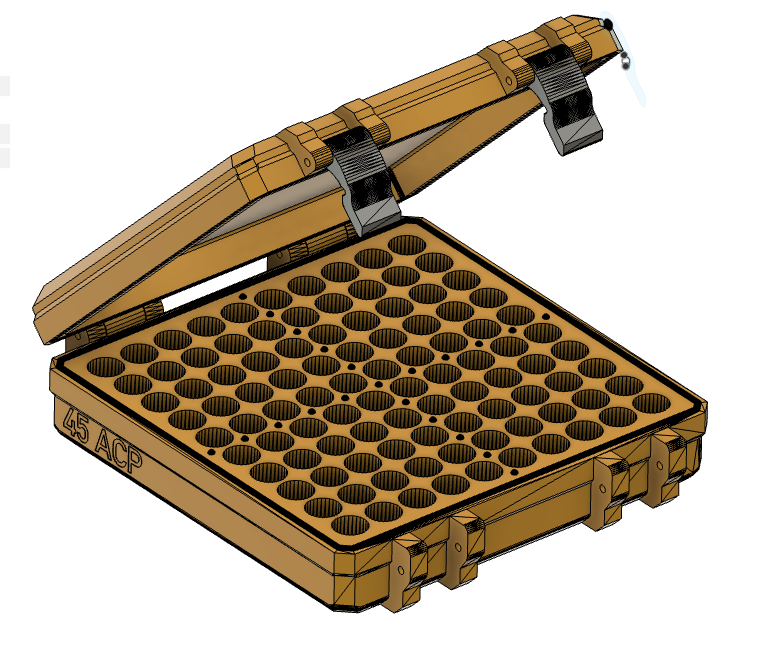
Choosing the right shotgun ammo hinges entirely on matching your payload to the purpose. For winged game or clay targets, birdshot’s tiny, numerous pellets 6.5 PRC Ammo for Sale create a dense, fast-spreading pattern that downs birds without shredding meat. When you need raw stopping power against larger threats like deer or home defense, buckshot delivers several heavy .30-caliber balls that punch deep and devastate soft tissue at close range. For maximum penetration through barriers, thick bone, or dense brush, a single slug acts like a massive, spinning bullet, offering extreme energy and a predictable, straight-line trajectory. Whether you’re hunting doves, defending a hallway, or dispatching a wild boar, your shot choice dictates effectiveness. Ignore the payload’s role, and you risk crippling a bird, over-penetrating a wall, or failing to drop a determined attacker. Selecting the correct shot size is not preference—it’s tactical necessity for each unique scenario.
Why Birdshot Is Ideal for Small Game and Clay Shooting
Birdshot’s tight, dense pattern of small pellets makes it ideal for small game and clay shooting because it delivers a quick, humane kill on birds and rabbits without shredding the meat, unlike heavier loads. For clay targets, the fine shot creates a broader, forgiving spread that increases your chance of breaking a fast-moving disc at 20–40 yards, while the specialty sports lighter recoil lets you stay on target for repeated shots. Because the pellets lose energy rapidly downrange, birdshot is also safer for shooting over open fields where a miss might carry toward distant structures. Choosing the right shot size—from #8 for clays to #6 for pheasants—keeps your pattern effective at typical wing-shooting ranges.
When to Choose Buckshot for Home Defense and Large Game
For home defense, buckshot is the definitive close-range stopper, delivering multiple .33-caliber projectiles that transfer devastating energy without the over-penetration risk of slugs in typical wall scenarios. Choose 00 or 000 buck when you need immediate threat neutralization inside 15 yards, as the spread pattern minimizes aiming error under extreme stress. For large game like deer or wild hogs, buckshot shines in dense cover or thick brush where slugs risk deflection and shots stay under 30 yards. *The tradeoff is brutal recoil and limited reach, so reserve buckshot for situations demanding raw stopping power over precision.* A 12-gauge with 2¾-inch 00 buck offers nine pellets—enough for a clean ethical kill on a 200-pound animal, yet equally capable of ending a lethal encounter in a hallway. Your choice hinges on distance and threat size, not marketing hype.
Sabot vs. Foster Slugs: Which Delivers Better Accuracy at Range?
When comparing **sabot vs. Foster slugs** for range accuracy, the sabot design wins decisively beyond 75 yards. A sabot slug uses a lightweight, aerodynamically shaped projectile encased in a plastic sabot that peels away after leaving a rifled barrel, achieving tighter groups and flatter trajectories. Foster slugs, being solid lead with a hollow base and rifling fins, are designed for smoothbore barrels and are accurate only to about 50–75 yards, after which their poor ballistics cause rapid drop and drift. *However, the sabot’s superiority is entirely dependent on a rifled barrel or rifled choke Handgun Ammo for Sale tube; firing them through a smoothbore results in keyholing and terrible accuracy*. For hunters taking shots past 75 yards, sabot slugs are non-negotiable. Sabot slug accuracy at range outperforms Fosters by 2–3 inches at 100 yards in practical field tests.
Q: Which delivers better accuracy at range—sabot or Foster slugs?
A: Sabot slugs, provided Rimfire Ammo for Sale your shotgun has a rifled barrel; they maintain sub-2-inch groups at 100 yards, while Fosters open up to 6 inches or more at that same distance.
Shot Size, Velocity, and Choke: How These Three Factors Shape Your Results
Shot size, velocity, and choke work together as one system, not three separate dials. Bigger shot like #4 buck carries more energy per pellet but patterns tight, so an open choke (like cylinder) prevents clumping. Smaller shot, say #7.5, needs a tighter choke (modified or full) to keep the pattern dense at range. Velocity matters because faster loads flatten the shot string, meaning a more forgiving hit on moving targets, but they also recoil harder—so your follow-up shot suffers. **The real trick is matching velocity to choke: high-speed loads with a tight choke can blow holes in the pattern, while slower loads with a wide choke strangle your reach.** *Q: Why does my pattern look patchy at 30 yards?* A: Likely your fast #8 shot is outrunning the constriction of your modified choke—drop to standard velocity or loosen to improved cylinder.
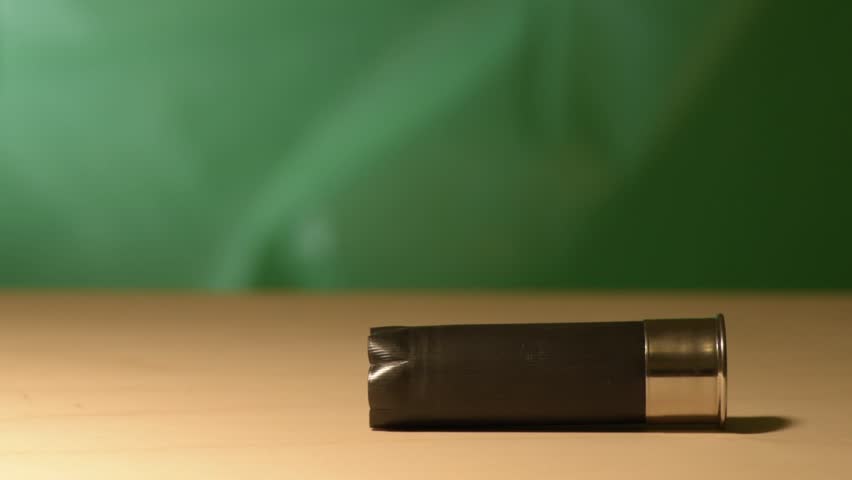
Decoding Shot Size Numbers—What the “8” or “00” Actually Mean
The numbers stamped on your shells—like “8” or “00”—aren’t random; they refer to pellet diameter in inches or millimeters, but the system gets quirky. Smaller numbers mean bigger pellets (a “8” is tiny, around .08 inches), while larger numbers go smaller—until you hit “0” (“ought”), then they get bigger again as zeros stack up. So “00” (double-aught) is a hefty .33-inch pellet, Shotgun Ammo for Sale great for deer, while “8” is fluffy bird-shot for doves. Here’s the quick mental trick:
- Numbers 2–12: descending size as the number climbs up.
- “0” to “000”: each zero 7mm-08 Ammo for Sale adds roughly .03 inches of diameter, so “00” is a mid-weight bruiser.
- Always check the box for actual pellet count—size affects how many fit in the shell.
How Velocity Impacts Recoil, Pattern Density, and Downrange Energy
Higher velocity increases felt recoil proportionally, as faster payloads demand more propellant energy transferred into the shooter’s shoulder. This trade-off affects shot-to-shot recovery, slowing follow-up accuracy. Simultaneously, velocity compresses the shot string, keeping pellets tightly packed in flight, which improves pattern density at medium ranges—though excessive speed can distort pellets, causing erratic spread. Downrange energy benefits most: a 1,400 fps load retains substantially more striking power at 40 yards than a 1,200 fps round, crucial for clean kills on larger game. However, velocity’s pattern advantage fades past 50 yards, where drag dominates, so practical gains require balancing speed against recoil tolerance and choke constriction.
Velocity elevates recoil, tightens near-field pattern density, and maximizes downrange energy, but diminishing 6.5 Creedmoor Ammo for Sale returns demand careful tuning with choke and shot size.
Selecting the Right Choke to Tighten or Loosen Your Pattern
When you’re dialing in your shotgun ammo, the choke is your quickest tool to tighten or loosen your pattern without swapping shells. A full choke, for instance, squeezes the shot column harder, letting you reach out farther on turkeys or waterfowl. But if you’re shooting close-cover quail or skeet, a cylinder or improved cylinder opens the pattern up, giving you a forgiving, wide spread. Match the choke to your actual yardage—not the box’s hype. Test different tubes at a patterning board, because your ammo’s velocity and shot size interact with each constriction uniquely. Start with modified as a versatile middle ground, then fine-tune from there.
Choosing Shells for Different Scenarios: Defense, Hunting, and Sport
You grab the 12-gauge from the safe, but your hand hesitates over the ammo shelf. For defense, you need #00 buck—eight or nine .33-caliber pellets that dump energy fast in a hallway, with a tight pattern from a cylinder choke. For hunting, pheasant demands #4 or #5 steel shot, sized to break feathers yet hold enough punch at 40 yards; ducks, however, want #2 or BB for longer crossing shots. Sport clays? That’s about breakage, not penetration, so #8 or #7.5 lead loads cycle fast and pattern open. Question: What shell do you grab for a home-defense scattergun at 3 a.m.? Answer: #00 buck, short 2¾-inch, proving that pellet count beats slug overpenetration. I once watched a hunter miss a flushing rooster because he loaded heavy turkey loads—too tight a pattern—while his buddy dropped it with field loads. Match the shell to the distance, the target, and the consequence, not the rack.
Top Considerations for Home-Defense Loads: Penetration vs. Overpenetration
For home defense, balancing penetration versus overpenetration dictates every load choice. You need enough force to neutralize a threat through heavy clothing or barriers, but excessive penetration through interior walls risks hitting family or neighbors. Buckshot, especially #4 or reduced-recoil 00, offers deep tissue damage while fragmenting less predictably than slugs, yet still passes through drywall. Birdshot penetrates poorly, failing to stop an assailant reliably. Consider that your shot pattern expands in tight hallways, reducing effective range and altering penetration dynamics. Therefore, select a load with controlled, moderate penetration—like #4 buckshot—and pattern-test it in your actual home layout to gauge wall performance.
Prioritize defensive loads that reliably stop threats without excessive wall penetration, accepting reduced payload for safety.
Picking the Best Shells for Upland Birds, Waterfowl, and Deer
For upland birds, prioritize lightfield loads with smaller shot—size 6–8 lead or bismuth—to create a dense pattern that breaks feathers without shredding meat. Waterfowl demand heavier, non-toxic shot like steel or tungsten in sizes 2–4, paired with 3-inch or 3.5-inch magnum shells for clean kills at long range. Deer hunting with a shotgun means slugs: choose a 1-ounce rifled slug for smoothbore barrels, or sabot slugs for rifled barrels, ensuring you match the shell’s ballistic profile to your optic and twist rate. Always verify your choke’s constriction, since a full choke ruins bird patterns while an improved cylinder fails on ducks. Test each load across 20 yards 7mm WSM Ammo for Sale to confirm your gun cycles and prints predictably.
Match shot size to target—small for birds, dense non-toxic for waterfowl, and slugs for deer—then verify choke and pattern before hunting.
What to Look for in Competition or Practice Loads to Save Money

For competition or practice, prioritize low-recoil, high-volume loads that mirror your match ammunition’s velocity and shot charge. Look for bulk-packed (250-round or 500-round cases) 7/8 oz or 1 oz loads at 1,150–1,200 fps, which cycle semi-autos reliably but reduce fatigue and barrel wear. Check for consistent crimps and polished hulls—these prevent feeding jams and are often rebranded factory seconds. Buy in off-season or from regional distributors to slash per-box costs, but verify the shot size matches your target discipline (e.g., #8 for skeet, #7.5 for sporting clays). Avoid novelty “training” loads with odd payloads; they teach nothing about your gun’s rhythm.
- Compare price per shell, not per box; 500-count flats almost always beat 25-count boxes.
- Test 10 rounds of a new batch for ejection and pattern before committing to a case.
- Choose plastic hulls over paper—they survive reloading, extending cost savings further.
Maximizing Performance: Storage, Care, and Common Shell Problems

To get the most from your shotgun ammo, store it in a cool, dry place—humidity is the silent killer of hulls and primers. Keep shells in their original box or a sealed ammo can, and rotate your stock so you’re always shooting fresher rounds, not decade-old bargains. Crimps can loosen from temperature swings, so avoid leaving them in a hot car dash; a loose crimp means erratic patterns. For care, wipe down brass or steel bases with a dry cloth after a damp hunt—corrosion on the rim causes feed failures. Common shell problems include swollen hulls from over-oiling, which jam the chamber, and dents in the plastic that squash the shot column. If you see cracked hulls, don’t force them—they’ll split on extraction. Squib loads are rare, but a sudden “pfft” instead of a bang means stop, unload, and check the barrel before anything else. Finally, never mix old paper shells with new plastic in the same pocket; they absorb moisture differently and swell unpredictably.
How to Store Your Cartridges to Prevent Moisture Damage and Duds
To keep shotgun shells reliable, store cartridges in a sealed, airtight container with desiccant packets, which actively pulls ambient humidity away from primers and hulls. Avoid basements or garages where temperature swings cause condensation inside the wad and powder charge. Keep boxes upright so the crimp doesn’t deform under weight, and never leave loose shells in a damp gun case or pocket. Even a single overnight dew cycle can wick moisture into the primer flash hole, turning a crisp round into a silent click. For long-term storage, follow this sequence:
- Wipe each shell with a dry microfibre cloth to remove surface oil or grit.
- Place shells back in their original cardboard or plastic tray, crimp end up.
- Seal the tray inside a heavy-duty zip bag with one silica gel sachet per 25 rounds.
- Store at a stable 15–20°C, away from direct sunlight or heating vents.
Check the desiccant colour monthly and replace it if it shifts to pink or blue, ensuring every shot you load is a bang, not a dud.
Troubleshooting Jams, Misfires, and Poor Patterns with Different Loads
When troubleshooting jams, misfires, and poor patterns, first isolate the variable: the load. A shotgun ammo load mismatch often causes cycling failures, so confirm your shell’s hull length and pressure rating match the gun’s action. Misfires frequently stem from hard primers on budget rounds—switching to a Ammunition for Sale brand with sensitive primer compounds usually cures it. Poor patterns, meanwhile, indicate your choke isn’t tuned to the shot size or payload; test a tighter choke for steel shot or a lighter load for target loads. Always clean the chamber after switching to low-brass shells, as residue builds up and causes extraction jams.
- Test at least three different loads to isolate feeding versus firing faults.
- Check for burrs on the extractor if a specific brand misfires repeatedly.
- Pattern at 40 yards with a new box of shells before trusting it for hunting.
- Log each load’s pressure and recoil data to predict cycling reliability.
Tips for Testing and “Pattern-Board” Your Favorite Brand and Load Combo
To truly know what your shotgun delivers, you must pattern-board your favorite brand and load combo at your typical engagement distances, not just at the muzzle. Shoot a fresh target for each shell, aiming at a consistent point, then count pellet strikes within a 30-inch circle to calculate density and evenness. Always test at least three different distances—like 20, 30, and 40 yards—because the pattern spread changes drastically, revealing the optimal range for your choke. Run multiple shots per load to verify repeatability, and clean your barrel between brands to avoid fouling skewing results. This data lets you match ammo to your hunting or sporting scenario, avoiding surprises in the field.
Pattern-board every new batch of shells at multiple ranges, count pellet distribution, and clean between tests to lock in your shotgun’s most reliable load combo.