
Buy Bulk Ammo Now and Lock In Low Prices Before They Climb
Bulk ammo is simply a large quantity of cartridges—often hundreds or thousands of rounds—purchased in one box or case, and it works exactly like standard ammunition when loaded into your firearm. The main benefit is cost savings per round, since you’re paying less for the same quality and performance, which means more trigger time at the range without stretching your budget. To use it, just store the sealed containers in a cool, dry place and load magazines or cylinders as you normally would, letting you shoot freely without running out mid-session.
What Does Buying in Volume Really Mean for Your Shooting Budget?
Buying bulk ammo shifts your shooting budget from a per-box mindset to a per-round cost, which is where the real savings appear—volume discounts typically cut 10–20% off the price per cartridge. This means you can allocate the same monthly funds toward significantly more trigger time, but only if you have the cash flow to front a large upfront payment. Bulk purchases also create a per-session “sunk cost” effect: since you’ve already paid, each range trip feels cheaper, encouraging more frequent practice without guilt. However, the true budget benefit only materializes if you actually shoot through the stock before prices drop or your preferences change. Storing thousands of rounds ties up capital that could otherwise cover gear upgrades, so calculate your realistic monthly consumption first. Fixed costs like shipping and transfer fees get diluted across more rounds, yet they still add up if you buy from multiple vendors. Always compare final delivered cost per round, not just the sticker price, to ensure the bulk deal genuinely 6mm Creedmoor Ammo for Sale beats a case of standard boxes.
Breaking Down the Per-Round Cost Difference Between a Box and a Case
The core of bulk ammo savings lies in the per-round price shift between a 20-round box and a 500-round case. A box of 9mm might run $0.28 per round, but a case often drops that to $0.23—a five-cent gap. Multiply that by 500 rounds, and you’ve saved $25, which effectively .243 Ammo for Sale pays for a second box of defensive loads. The difference isn’t just wholesale pricing; it’s reduced packaging labor and shipping per unit. Always calculate the price-per-round before checkout, because a case’s “discount” can be negated by high freight costs. Compare the case total (including shipping) against 25 individual boxes to see the true delta.
Q: Why does the per-round cost drop so sharply when buying a case versus a box?
A: Manufacturers and retailers bake in fixed overhead—packaging, palletizing, and handling—into each box. A case spreads that fixed cost across 500 rounds instead of 20, which lowers the unit price by 10–20% depending on caliber and brand. That’s why the per-round delta is the only figure that matters when deciding between a box and a case.
How Packaging Size Affects Ammo Pricing per Caliber
Packaging size drives per-round cost differently across calibers because manufacturing and logistics overhead scale unevenly. For common calibers like 9mm or .223 Remington, the jump from a 50-round box to a 500-round case typically cuts per-round price by 15–25%, since the same brass, primer, and powder costs spread over fewer packaging units. For less common calibers such as .45-70 Government or 6.5 Creedmoor, the savings are often steeper—sometimes 30% or more—because retailers discount larger boxes .22-250 Ammo for Sale to move slower inventory, while the per-caliber tooling setup remains fixed. However, the optimal bulk size hits a plateau where extra rounds no longer reduce price, and you only pay for storage and shelf life. Packaging size affects ammo pricing per caliber by shifting the balance between fixed per-box costs and per-round material costs, so compare price-per-round at both 100 and 500 counts before committing.
- A 1,000-round case of 9mm can beat a 50-round box by up to 20 cents per round.
- For magnum rifle calibers, the 20-round box vs. 200-round case gap often exceeds 40% in per-round savings.
- Pistol calibers with high demand rarely drop below a 10% savings beyond the 9x23mm Winchester Ammo for Sale 500-round mark.
- Premium or match-grade ammo shows smaller packaging discounts because the projectile cost dominates, not the box.
Understanding the True Value of 500 vs. 1,000 Round Counts
The decision between a 500 and 1,000 round case hinges on your actual consumption rate, not just the sticker price. While the per-round savings on a 1,000 count is real, it only translates to value if you realistically burn through that volume before your next purchase cycle. A 500-round case offers lower upfront capital outlay and easier storage, reducing the risk of tying up cash in an unused caliber. Conversely, the true cost-per-round advantage of 1,000 rounds emerges only when you consistently shoot past the 500 mark, making the second half of the case essentially “cheaper” than your first. The hidden value lies in amortizing shipping fees and reducing purchase frequency, but only for high-volume shooters.
- Calculate your monthly round count; if under 500, the larger case forces unnecessary inventory carrying costs.
- Compare the price gap: if 1,000 rounds is less than 1.9x the 500-count price, the bulk value is genuine.
- Factor in storage constraints—a sealed 1,000-round case requires 7.62 Tokarev Ammo for Sale dedicated, climate-controlled space.
- Assess barrel wear: 1,000 rounds of practice accelerates maintenance intervals, offsetting savings.
Selecting the Right Cartridge Types for High-Volume Shooting Sessions
When you buy bulk ammo for .223 Ammo for Sale a long afternoon on steel targets, the cartridge choice isn’t about power—it’s about rhythm. I learned this after burning through 500 rounds of hot .357 Magnum loads, my wrists aching and my groups widening before lunch. For high-volume sessions, the cartridge must balance recoil impulse with bore longevity. A .223 Remington or 9mm Luger lets you stay on target without flinching, while the brass and powder burn consistently across thousands of rounds. Avoid over-pressure hunting loads; they heat barrels fast and split cases at the mouth. Instead, select standard-pressure, full-metal-jacket or soft-point options designed for repetitive cycling. That way, your selecting the right cartridge types becomes a matter of endurance—not just accuracy. By the last hundred rounds, your shoulders stay loose, your extraction stays smooth, and the bulk box feels like a tool, not a punishment.
Distinguishing Between FMJ, JHP, and Steel-Cased Loads for Practice
For high-volume practice, distinguishing between FMJ, JHP, and steel-cased loads hinges on cost, function, and mechanical wear. Full metal jacket (FMJ) rounds feature a lead core fully encased in copper, offering reliable feeding and minimal fouling, making them the default for routine drills. Jacketed hollow points (JHP), by contrast, expand upon impact and are significantly pricier, so reserve them for periodic function-checking in your defensive firearm rather than bulk training. Steel-cased ammunition uses a lacquered or polymer-coated steel shell, which is often cheaper but can cause accelerated extractor wear and may expand differently in 6mm ARC Ammo for Sale tight chambers upon heat. Therefore, for sustained practice, prioritize FMJ for the bulk of your session, use JHP sparingly for reliability verification, and test a sample of steel-cased rounds to confirm your gun cycles them cleanly before committing to a case purchase.
Matching Bullet Grain Weight to Your Firearm’s Twist Rate for Accuracy
When buying bulk ammo, matching bullet grain weight to your barrel’s twist rate is critical for accuracy. Twist rate, expressed as a ratio like 1:7 or 1:9, dictates the optimal bullet length—heavier grains are longer and need faster twists to stabilize. A 55-grain load in a 1:7 barrel can over-stabilize, while a 77-grain bullet in a 1:9 twist will yaw and keyhole. Consult your manual, then test a few boxed samples at 100 yards to confirm group sizes before committing to a case. Twist-rate compatibility prevents wasted bulk purchases on ammo your firearm cannot stabilize.
Verify your rifle’s twist rate against bullet grain weight—stability equals accuracy, avoiding wasted bulk ammo.
How to Decide Between Standard Pressure and +P Rounds in Bulk Orders
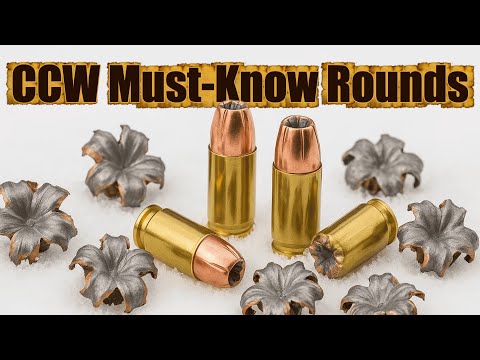
When ordering bulk ammo, first verify your firearm’s manufacturer rating for +P pressure; if unrated, stick to standard loads to avoid accelerated wear. For high-volume sessions, standard pressure reduces felt recoil and muzzle flip, enabling faster follow-up shots and less shooter fatigue over hundreds of rounds. Choose +P only if your gun is explicitly rated for it and you need deeper barrier penetration or improved terminal performance, as these loads generate more heat and throat erosion. Standard pressure is the safer default for bulk orders, since +P costs more and offers negligible accuracy gains at typical training distances. Reserve +P for defensive carry verification, then switch back to standard ammunition for the bulk of your practice.
Practical Ways to Store and Preserve Large Ammunition Quantities
For bulk ammo, prioritize climate control by storing cans in a cool, dry space, ideally below 70°F with low humidity, to prevent powder degradation and primer corrosion. Use sealed military-surplus metal cans with fresh rubber gaskets, adding desiccant packs and a hygrometer to monitor moisture levels inside. Rotate your stock using a first-in, first-out system, clearly labeling each can with caliber, lot number, and purchase date to track age and performance. While airtight storage is critical, periodically cracking the cans for a few hours in a dry environment helps release trapped moisture that desiccants cannot fully manage. Elevate all containers off concrete floors on wooden pallets or shelving to avoid temperature swings and wicking dampness. For loose bulk ammo like .22LR, keep it in its original factory boxes inside the cans, as cardboard absorbs minor humidity fluctuations. Never store ammo near solvents, gasoline, or fertilizers, as fumes can weaken case integrity. Check for verdigris or tarnishing every six months, and immediately separate any corroded rounds to protect the entire batch.
Choosing the Right Ammo Cans: Sealed vs. Field-Use Containers
When buying bulk ammo, the choice between sealed and field-use containers defines your storage strategy. Sealed military-surplus cans with rubber gaskets excel in long-term preservation, effectively blocking humidity and preventing corrosion, but they require deliberate opening effort. Field-use cans, typically plastic or lighter metal, prioritize rapid access and portability, yet they often lack weatherproofing, allowing moisture ingress during prolonged storage. For mixed bulk stockpiles, a common logical approach designates sealed cans for reserve ammunition and field-use containers for training or range trips, ensuring each environment receives the appropriate protection level.
- Inspect gaskets on sealed cans annually; replace them if they crack or lose pliability.
- Use silica gel desiccant packs inside both types to control residual moisture.
- Never stack field-use cans in damp basements; raise them off concrete floors.
- Label sealed cans with purchase date and lot number to track rotation without opening.
Managing Humidity and Temperature in Your Long-Term Stockpile
For bulk ammo, stable temperature and humidity control is non-negotiable. Keep your stockpile between 55–70°F; avoid attics or garages where daily swings force condensation inside cases. Use a digital hygrometer to monitor relative humidity, targeting 30–40%. Above 50%, primers and powder degrade rapidly. Add desiccant canisters (silica gel) inside sealed ammo cans, but recharge them monthly. For large quantities, invest in a dehumidifier for the storage room—not just passive packs. Never store directly on concrete; palletize to prevent wicking moisture. Inspect seals quarterly; if a gasket feels brittle, replace it before corrosion starts. These steps outlast any “waterproof” claim on factory packaging.
Rotating Older Stock First to Keep Every Bullet Reliable
When managing bulk ammo, adopt a strict **first-in, first-out (FIFO) rotation** to ensure older stock is used before newer purchases. This prevents primers and propellants from degrading beyond safe performance, as even sealed ammunition experiences chemical breakdown over decades. Physically mark each can or box with purchase dates using a permanent marker, then store new lots behind existing ones on shelves. On range days, pull from the front of the stack, and reserve the oldest cartridges for practice sessions rather than defensive loads. For inventory control, maintain a simple logbook or spreadsheet that tracks lot numbers and acquisition dates, so you can visually confirm that no box sits untouched for more than three years. By cycling stock systematically, you maintain consistent ballistic performance and avoid the frustration of misfires from long-forgotten surplus batches.
Zeroing and Consistent Accuracy with One Lot of Cartridges
When using bulk ammo, zeroing with a single lot of cartridges is essential because lot-to-lot variations in powder charge, bullet seating depth, and brass case volume can shift your point of impact subtly but predictably. A rifle zeroed with lot A may print a different group center with lot B, even if both are the same brand and grain weight. By firing your entire zeroing session—typically 10 to 15 shots from a benchrest—from only one sealed case of ammo, you lock in a reference point that remains true for every round from that same lot. This consistency also lets you verify that mechanical accuracy (group size) matches practical accuracy (point of aim) without introducing variable ammunition as a confounding factor.
If you later buy a new lot, re-zero your optic before relying on the old data, because even quality bulk ammo can show a 1–2 MOA shift between batches.
Store your zeroing lot apart from practice ammo to maintain that verified baseline for future load development or optic adjustments.

Why a Single Lot Number Improves Your Groups at the Range
When you buy bulk ammo, the box label tells a story: a single lot number means every cartridge came from the same blend of powder, primer, and projectile. That uniformity is your secret weapon for tighter range groups. Because lot-to-lot variance—even by a fraction of a grain—shifts your point of impact, mixing lots forces your rifle to fight for a compromise zero. But with one lot, your barrel sees identical pressure curves and velocities shot after shot, so your groups shrink from “minute of pizza box” to a ragged hole. You tracking fliers? They vanish because nothing changes between rounds. Zero once, trust that data, and spend your time shooting—not re-dialing turrets.
How to Re-Sight Your Optics When Switching Between Case Lots
When you burn through bulk ammo and switch case lots, your point of impact can shift due to velocity and bullet seating variations. 7.5×55 Swiss Ammo for Sale Re-sighting your optics between case lots prevents costly misses and keeps your zero honest. First, confirm the new lot’s ballistic similarity by firing a three-shot group at your zero distance—don’t adjust before seeing data. If the group centers off your aim point, calculate the MOA correction from the center of that group, not the flyers. Dial turrets precisely, then fire another three-shot group to verify the shift. Never trust your old zero until the new lot prints to your crosshairs on paper.

- Shoot a cold-bore confirmation group before touching your turrets.
- Measure the center shift against your known 100-yard or 200-yard zero.
- Apply adjustments in 0.25 or 0.1 MOA increments, then revalidate.
- Log the new lot’s zero in your phone or notebook for future reference.
Setting Up a Dedicated Bulk-Use Reserve for Precision Drills
Designate a dedicated bulk-use reserve solely for precision drills by segregating a single lot of cartridges from your general supply, then firing a small sample to confirm zero stability before committing the rest. Store this reserve in identical conditions—temperature and orientation—to the match rounds you rely on, preventing point-of-impact shifts during extended practice. Resist dipping into this stash for casual plinking, as every round must stay accountable to the same ballistic profile. Label the case with lot number and drill date, and rotate the reserve only after validation. This disciplined separation ensures your consistent one-lot accuracy reserve never introduces surprises during critical zero confirmation sessions.
Splitting Bulk Purchases Among Different Firearms Without Waste
Splitting bulk ammo across different calibers without waste starts with building your stash around shared platform logistics. If you own a 9mm pistol and a PCC, or a .223 rifle and a 5.56-compatible carbine, you can buy one massive case and feed both guns from the same bucket, eliminating redundant packaging and stale inventory. The trick is to avoid specialized loads—purchasing only standard-pressure, full-metal-jacket rounds ensures every box works in each firearm. Track your round counts per gun weekly; when one firearm runs dry, dip into the shared reserve for it, but immediately rotate leftover stock to the other gun during your next range session. This creates a **dynamic split inventory** where no cartridge sits idle. For revolvers and semi-autos sharing .38 Special, dedicate one ammo can to each firearm’s primary mags, topping off the low one first. **Bulk ammo allocation** becomes a zero-waste loop when you standardize your loads and rotate draw-downs evenly across every barrel you own.
Calculating Caliber-Specific Needs for Pistols, Rifles, and Carbines

Calculating caliber-specific needs for pistols, rifles, and carbines begins with separating your total round count by firearm purpose, not by gun count. For pistols, allocate roughly double the rounds you expect to shoot in a session—short-barrel platforms often need more practice for defensive drills. Rifles, with higher muzzle velocity and frequent zeroing, typically demand a 3:1 ratio of practice ammo to hunting or precision loads. Carbines, sharing pistol calibers like 9mm or .40 S&W, let you merge inventory: compute combined weekly usage and buy a single bulk lot, avoiding duplicate calibers. However, never pool rimfire and centerfire counts, as their consumption patterns differ drastically. For a mixed arsenal, track monthly range logs per platform and adjust future bulk orders to the slowest-consumed caliber to prevent stale stock.
- Calculate pistol rounds per magazine × reloads per session, then add 10% for malfunction drills.
- For rifles, subtract 20% from total rounds for sight-in and cold-bore verification, leaving 80% for practice.
- If a carbine shares a pistol caliber, total both firing rates and buy one shared SKU in bulk.
- Use a 6-month average per firearm to cap each caliber at 15% oversupply.
Using Empty Bulk Trays to Sort and Organize Mixed Orders
When you split a bulk ammo order across several firearms, empty bulk trays become your best friend for staying sane. Instead of mixing .223, 9mm, and .308 into one chaos pile, dedicate one tray slot row per caliber or firearm, using the existing indentations as a visual grid. This makes sorting mixed ammo orders a fifteen-minute task, not a rummaging nightmare. As you unpack, immediately place rounds into the tray; leftover spaces show exactly what you’ve allocated. If you’re low on trays, reuse the cardboard inserts from factory boxes—they’re already shaped for this. Finish by labeling each tray with a sharpie or sticky note before transferring rounds into permanent storage.
Q: How do empty bulk trays prevent waste when splitting orders?
A: They let you physically bulk ammo for sale separate calibers before you store them, so you never accidentally “lose” stray rounds or buy duplicates because you couldn’t see what you had left over.
Establishing a Replenishment Trigger Point Before You Run Dry
Before you split a bulk ammo order across multiple firearms, set a replenishment trigger point for each caliber—not a vague “low” feeling. Calculate your average monthly round count per gun, then subtract that from your current stock to find the exact number where you must reorder. For example, if you shoot 200 rounds .260 Remington Ammo for Sale of 9mm monthly and hold 1,000, your trigger hits at 800 remaining. That leaves enough overlap to wait for sales or shipping delays without dipping into reserve. Run-dry risk spikes when triggers are ignored. Sequence it:
- Track per-firearm usage for 60 days.
- Multiply by two for a safety buffer.
- Subtract that from your total bulk purchase.
- Rebuy the moment you cross that line, not after.
This keeps every gun fed while your split order stays balanced.