
Buy Bulk Ammunition for High Volume Shooting and Long Term Savings
Running low on ammo right when you need it most is a pain, and buying boxes one at a time never seems to keep your stock ready. Bulk ammunition solves this by offering a single, large quantity purchase—like 500 or 1,000 rounds—so you have a consistent supply on hand for practice sessions or range days. Since it’s typically packed in loose cartons or simple boxes, you save on per-round cost and packaging waste, while the ammo itself works just like any standard round in your firearm. Just store it in a cool, dry place, and you’ve got a reliable reserve that’s ready to load whenever you are.
What Actually Changes When You Buy Ammo in Volume?
Buying bulk ammunition fundamentally shifts your cost-per-round trajectory, making bulk ammunition the single most effective way to lower your shooting budget. The immediate change is price per box dropping by 20–40% compared to single-box retail, which allows you to shoot more frequently without recalculating finances. However, you must adapt your storage habits—ammo cans with desiccant packs become mandatory because volume invites moisture damage if you merely stack boxes in a garage. Logistics change too: you’ll need a dedicated shelf or cabinet, and shipping weight means you’ll prefer local pickup or palletized delivery. Finally, your range behavior shifts from rationing rounds to running drills without counting shots, which accelerates skill building. In short, volume purchasing transforms ammo from a precious commodity into a consumable tool, but only if you manage your supply chain and environment accordingly.
Cost Per Round: How Much Do You Really Save at Scale?

The real math behind bulk ammo hinges on cost per round savings at scale, where the per-box price drops as quantities climb past the 500-round mark. A 20-round box of 9mm might cost 28 cents per round, but a 1,000-round case often lands near 22 cents—a 21% reduction that adds up to $60 saved on a single order. The sweet spot is usually 500–2,000 rounds, where shipping and hazmat fees get diluted across more bullets. Beyond that, the curve flattens, so don’t assume 5,000 rounds is twice as economical as 2,000—it’s not. Calculating your actual savings means dividing total cost (including freight) by total rounds, not just staring at the sticker price.
True cost per round savings only emerge when you factor in 7mm Rem Mag Ammo for Sale shipping, hazmat, and breakpoints—typically 15–25% off compared to buying single boxes, with diminishing returns past 2,000 rounds.
Shipping Weight and Hazmat Fees: The Hidden Price of Big Crates
When you switch to bulk ammunition, the sticker price rarely reflects the final cost, as shipping weight and hazmat fees often add a significant surcharge. A single crate of 1,000 rounds can easily exceed 30 pounds, pushing shipments into higher freight brackets, and carriers calculate charges by dimensional weight, not just physical mass. Because primers are classified as hazardous materials, every order incurs a flat hazmat fee—often $20 to $30—regardless of order size, which means buying one big crate beats splitting orders. *The most economical move is consolidating your entire purchase into one shipment, but this also caps your total weight per box, so verify each vendor’s per-package limits before checkout.* Factoring these fees into your per-round cost reveals that a “cheap” bulk deal may be less competitive than a smaller order from a 9.3x72R Ammo for Sale nearby retailer with free shipping.
Case vs. Crate vs. Can: Which Bulk Packaging Fits Your Storage?
When 6mm Remington Ammo for Sale you buy bulk ammunition, the packaging changes how you store it. Case vs. Crate vs. Can boils down to protection and access. A case usually means the original cardboard box holding loose rounds—cheap and stackable, but vulnerable to moisture. A crate is a wooden or heavy-duty plastic box that often contains several sealed cases; it’s great for long-term palletizing but bulky to move. A metal can (like a .50 cal can) is your best bet for damp garages or basements, since it seals out humidity. For quick rotation, go with cases; for permanent stash, use cans. A practical sequence:
- Decide how often you’ll grab ammo—cases for frequent use.
- Check your storage humidity—crates fail fast if damp.
- Transfer loose rounds into cans with desiccant packs for longevity.
How to Match Bulk Calibers to Your Specific Firearm and Purpose
Matching bulk calibers starts with your firearm’s engraved chambering—never assume, as a bulk case of the wrong headspace is a costly, dangerous paperweight. For your purpose, define the dominant task: if it’s high-volume range practice, prioritize a ubiquitous caliber like 9mm or .223 Rem for effortless bulk resupply and barrel life. For hunting or defensive loads, the same bulk purchase must deliver terminal performance, so choose a proven projectile weight and profile your specific twist rate stabilizes—check your barrel’s 1:7 vs. 1:12 twist before buying 1,000 rounds. Bulk buying locks you into a single ballistic signature, so test one box first to confirm feeding, extraction, and zero shift.
Your bulk caliber should be boringly reliable in your gun, not exciting on paper.
Finally, match bulk quantity to your actual monthly round count—overbuying ties up cash, underbuying breaks your training cadence.
Pistol Calibers for Range Volume vs. Rifle Calibers for Precision Lots
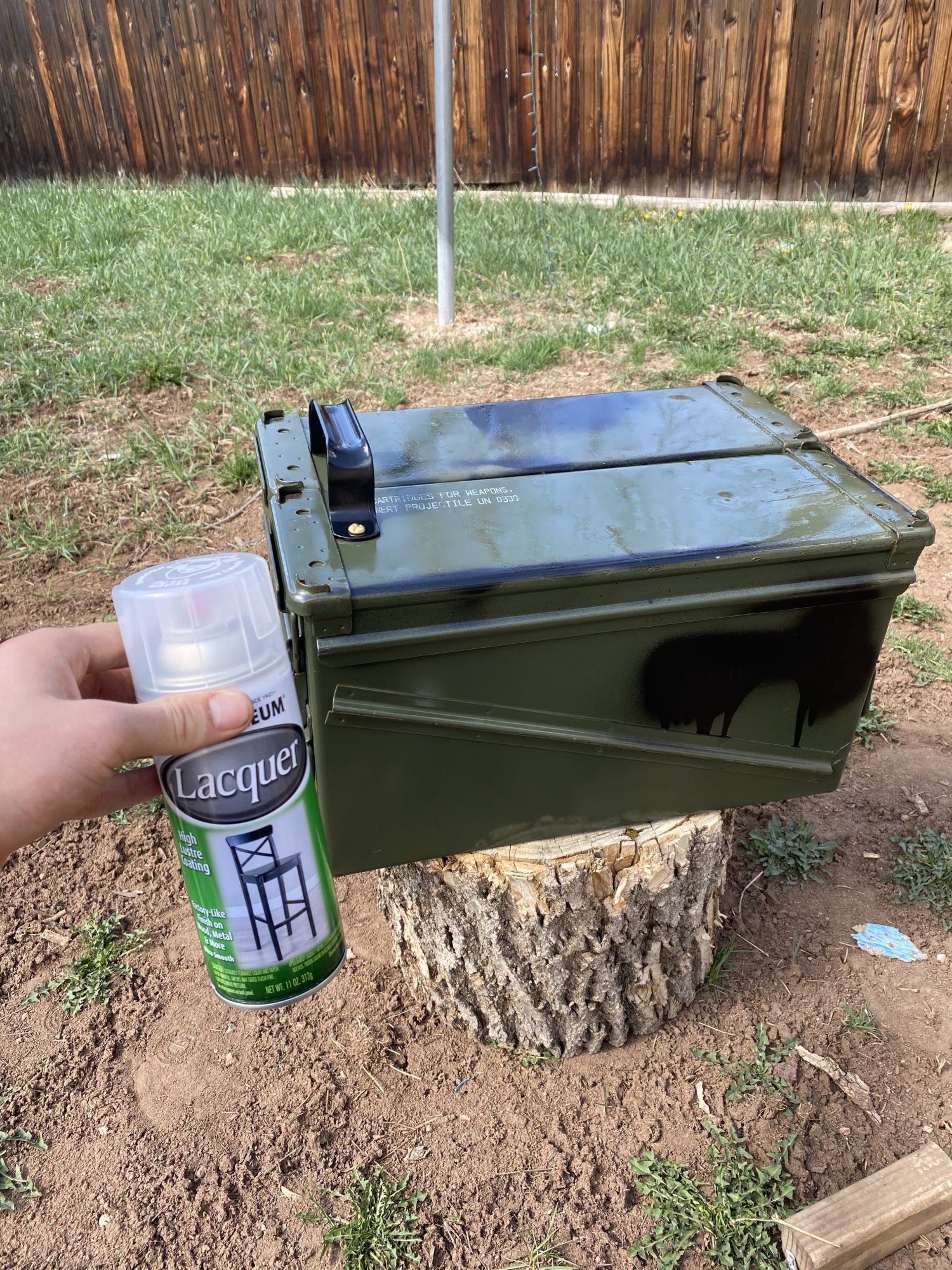
For high-round-count practice, bulk pistol ammunition in calibers like 9mm or .45 ACP is the practical choice because 9.3x62mm Mauser Ammo for Sale handgun platforms tolerate mixed headstamps and varying lot numbers without meaningful accuracy shifts. You burn through hundreds of rounds per session, so prioritize lowest cost per round over lot consistency; your pistol’s mechanical accuracy ceiling is the limiting factor, not the ammunition. Conversely, rifle precision lots demand strict lot-to-lot uniformity in bullet weight, seating depth, and powder charge—especially for .223 Remington or 6.5 Creedmoor. Mismatched lots introduce vertical stringing at distance, so you buy by lot number, verify velocity spread, and reserve that ammunition for zero confirmation or match days, not plinking.
Pistol bulk favors volume and price; rifle bulk favors 9×18 Makarov Ammo for Sale lot-matched precision for long-range consistency.
Understanding Lot Numbers and Headstamp Consistency in Large Orders
When you buy bulk ammunition, lot number consistency is your silent accuracy partner. Every box carries a lot number identifying the exact manufacturing run; components like powder charge and bullet weight can vary subtly between lots. For bulk orders, request cartons sharing the same lot to ensure your zero stays locked from the first round to the last. Likewise, verify the headstamp—the stamped code on the case base—matches across all boxes. Mixing headstamps means mixed case wall thickness, primer hardness, and neck tension, which alters pressure and point of impact. Before committing, .50 Cal Ammo for Sale open a few boxes and scan for identical markings.
- Order all ammunition from one lot number to maintain consistent ballistic performance.
- Check headstamps on a sample box; mismatched stamps indicate mixed sources.
- Store bulk rounds by lot and label containers to track future range results.
- Ask the seller for lot-specific photos if buying online sight-unseen.
When to Choose Full Metal Jacket, Hollow Point, or Remanufactured Rounds in Bulk
Choosing between **bulk ammunition types** comes down to what you’re actually doing at the range. Full metal jacket rounds specialty sports and supply are your go-to for high-volume practice, because the cheap, reliable construction keeps your cost per trigger pull low while still cycling reliably in most firearms. Hollow points, even in bulk, are for defensive loads or hunting—you want that expansion and stopping power, not just paper punching, so reserve them for your carry mags or serious field use. Remanufactured rounds are the budget sweet spot for casual plinking and function checks, but only when you trust the supplier’s QC and you’re not betting your life on them. Match the jacket to the job.
For bulk buying: FMJ for cheap practice, hollow points for personal protection, and remanufactured rounds for low-stakes range days—never mix your purposes.
Storage and Shelf Life: Keeping 5,000 Rounds Fresh and Reliable
For a five-thousand-round bulk ammunition investment, shelf life and storage integrity hinge on environmental consistency. Keep primers and powder stable by storing cans in a climate-controlled space, ideally between 55–75°F, with relative humidity below 40%. Avoid temperature swings that cause condensation inside ammo cans. Add desiccant packs, replacing them every six months, and seal the cans with fresh rubber gaskets. Rotate your stock by using oldest rounds first—mark each can’s purchase date or load date on the lid. If you store loose rounds in factory boxes, elevate them off concrete floors to prevent moisture wicking. Inspect a sample every quarter for tarnished brass, green patina on primers, or powder degradation odor. Properly managed, quality bulk ammunition reliably fires for decades, but neglect turns a valuable reserve into a mishmash of misfeeds and duds. Treat your stockpile like a precision tool: dry, dark, and untouched until needed.
Airtight Ammo Cans vs. Original Cardboard: What Keeps Primers Stable?
When you buy bulk ammo by the case, the original cardboard boxes are fine for transport, but they’re terrible at blocking humidity swings that slowly degrade primers. Airtight ammo cans with Ammunition for Sale rubber gaskets create a sealed microclimate, so moisture never reaches the primer compound, which keeps ignition reliable years down the road. Cardboard breathes, meaning it lets ambient moisture in and out with every temperature shift, and that cycling is what causes hard primers or hangfires. For long-term storage of five thousand rounds, transferring them into airtight ammo cans with desiccant packs gives you a decisive edge over leaving them in flimsy cardboard that offers zero protection from the environment. If you want primers that snap every time, skip the paper and go sealed.
Rotating Your Stock: Using Older Inventory First Without Breaking the Seal
When you buy in bulk, your ammo becomes a living system, not a static pile. The core discipline is always pushing the oldest boxes to the front of your safe, feeding them into your magazines first during range sessions. Yet, the golden rule is never to break the factory seal just to peek or rotate. A sealed box, with its airtight barrier and desiccant pack, is a time capsule. Rely on a permanent marker to date each case upon arrival, then trust that date over your curiosity. By keeping seals intact until your firearm is ready to cycle, you preserve internal pressure and primer integrity, ensuring your rotation is about timing, not tampering. This method guarantees that decades-old stock performs like new, with zero wasted rounds.
Moisture, Temperature, and Humidity—The Silent Killers of Bulk Purchases
Moisture, temperature, and humidity—the silent killers of bulk purchases—attack your ammunition’s primer compounds and propellants long before corrosion is visible. A single season of dramatic thermal cycling inside a non-insulated garage causes condensation to form inside sealed ammo cans, creating microscopic rust on brass cases and weakening case necks. To counter this, maintain a stable environment near 60–70°F with relative humidity below 40%, using desiccant packs that you recharge monthly. Never store rounds on concrete floors, which wick groundwater upward. Instead, elevate pallets and use a digital hygrometer to track daily swings. Controlling temperature and humidity prevents oxidation that otherwise degrades ignition reliability.
Q: What is the fastest way to damage 5,000 rounds through humidity?
A: Leaving cans unsealed in a high-humidity basement during summer. The moisture seeps into case mouths, causing powder clumping and corroding primers within weeks—even if the exterior looks pristine.
Breaking in a Bulk Lot: How to Test Fire a Sample Before Committing
You’ve got a pallet of bulk ammunition sitting in the garage, but before you burn through a single case, pull a random sample from different boxes—not just the top layer. Load five rounds per magazine, then fire them through your primary firearm, watching for failure-to-eject or primer strike inconsistencies. A bulk lot can hide a bad run in the middle of the batch, so alternate between test fire sessions with cold and hot barrels. Shoot at least 50 rounds across three separate days to expose temperature-sensitive powder issues. Check your groups for fliers beyond the usual spread, and feel for sharp recoil spikes that signal overpressure. If the sample runs clean and accurate, you’ve got confidence to commit; if not, you just saved yourself from a thousand rounds of jammed frustration.
The 50-Round Inspection Method for Misfires, Duds, and Power Variations
To validate a bulk lot, fire exactly 50 rounds while logging each ignition event. Separate misfires (no primer strike) from duds (strike but no bang) and note any velocity deviations via a chronograph or felt recoil change. A failure rate above two percent, or a single power spike, justifies rejecting the lot, as bulk ammunition sampling reliability depends on consistent primer and powder behavior across this threshold. Track extraction and case integrity for pressure signs, since a subtle overcharge may only appear once in several boxes. Ten consecutive clean rounds at the start do not guarantee the next forty will behave identically, so log every shot without skipping. If a dud occurs, wait 30 seconds before ejecting it, then recycle that round separately.
Q: How many misfires are acceptable in the 50-round inspection method?
A: Zero misfires are ideal, but one dud or misfire is tolerable if no power variation accompanies it; two or more failures invalidate the lot’s uniformity.
Chronographing Sample Rounds to Verify Velocity Claims from the Manufacturer
When breaking in a bulk lot, chronographing sample rounds verifies manufacturer velocity claims before you commit to a case. Set up a chronograph 10–15 feet from the muzzle, ensuring consistent lighting and no shoot-through interference. Fire five-round strings from a clean, cold barrel, recording each projectile’s speed. Compare the average to the box’s stated velocity; a variance above 50 fps signals inconsistent powder charges or lot-to-lot variation. For precision, follow this sequence:
- Zero the chronograph with a known reference load.
- Shoot a five-shot string of the bulk ammo, allowing 30 seconds between shots to avoid heat drift.
- Calculate the mean and extreme spread.
- Retest the same lot after 100 rounds to check for velocity decay.
If the spread exceeds 3% of the claimed value, reject the lot for long-range work but accept it for plinking. Always record barrel temperature and altitude, as both skew readings.
Checking for OAL (Overall Length) and Crimp Issues Across a Full Case

When evaluating a bulk lot, do not sample just the first few cartridges; pull rounds from each box and every row of the case to check overall length (OAL) consistency. Use calipers to measure the cartridge from base to bullet tip, flagging any round that deviates by more than 0.005 inches, as this can cause feed ramps to bind. Inspect the case mouth for a visible, uniform taper crimp—a sharp step or rolled edge signals over-crimping, which can bulge the shoulder and create pressure spikes, while a smooth transition indicates insufficient neck tension, risking bullet setback during cycling. Rotate each sample under light to catch asymmetric crimps, which often appear on one side only. Finally, drop-test a few rounds into a chamber gauge or your barrel’s throat; a too-long OAL will stop the slide short, while a too-short one can deepen headspace. These checks across the full case reveal if the manufacturer’s tolerances hold for every round, not just the first handful.
Verifying OAL and crimp on 7mm Rem Ultra Mag Ammo for Sale cartridges from every position in a bulk case catches feed, seating, and pressure defects before they cause malfunctions or damage.
Common Myths and Practical Tips When Buying Huge Quantities
A common myth is that buying bulk ammunition always guarantees a lower per-round cost, but shipping and hazmat fees can erase savings unless you calculate the true delivered price per round. Another misconception is that all bulk ammo is surplus or poor quality—many factory-new rounds are sold in case lots, so check the packaging. When buying huge quantities, focus on a single lot number to ensure consistent performance, and store ammo in a climate-controlled area, not on concrete, to prevent moisture damage. Rotate your stock using a first-in, first-out system, but avoid mixing partially opened boxes into sealed cases. Q: Is it smarter to buy 5,000 rounds of one caliber or split between two? A: One caliber, unless the second is for a primary defensive firearm, since your inventory cost per caliber rises with ammunition and magazine capacity. Inspect a few rounds from each case for corrosion or primer seating before committing to a massive order.
Does Buying Bulk Ammo Actually Go Bad? Separating Fact from Fudd Lore
The 9mm Ammo for Sale “ammo goes bad” claim is mostly Fudd lore, but it’s not entirely fiction. Factory-loaded centerfire ammunition, stored properly, can outlast you by decades; the real enemies are humidity, temperature swings, and physical damage. **Bulk ammo longevity depends entirely on storage discipline**, not the passage of time. Corrosion on primers or cases from moisture is the primary failure mode, while powder degradation—often smelled as a vinegar-like odor—usually only happens after decades of extreme heat. Ammo that has been soaked, tumbled in a hot car, or exposed to salt air is suspect. Rotate your stock by lot number, and shoot the oldest first; a sealed military surplus can, stored at 70°F, is effectively immortal.
- Store bulk ammo in sealed ammo cans with desiccant packs to prevent humidity-linked primer corrosion.
- Check for green verdigris on brass or loose bullets—these indicate unsafe deterioration, not normal aging.
- If primers ignite but the round is weak or squibs, discard that entire lot immediately; it’s a manufacturing or storage defect.
- Bullet setback from rough handling in bulk bins is a real safety risk, but it’s not “going bad”—it’s mechanical damage.
Mixing Brands in One Ammo Can—Safe or a Headache Waiting to Happen?
Mixing brands in one ammo can is function-friendly but logistically risky. Different manufacturers use distinct primers, case coatings, and propellant burn rates, which can alter point of impact between boxes. For range practice, this rarely matters; for zero verification, it destroys consistency. More critically, mixed-brand bulk ammunition complicates lot-based failure tracking—if a squib or misfire occurs, you cannot identify the culprit lot without meticulous separation. Also, headstamp variations make reloading brass a sorting nightmare, since case wall thickness and primer pocket dimensions differ. The real headache is inventory management: you lose round counts per lot, which affects pressure-sensitivity testing in specific firearms.
- Label each layer or use divider cards inside the can to preserve lot identity.
- Reserve mixed cans for high-volume drills, not precision or defensive loads.
- Separate steel-case from brass-case brands to avoid magnet-sorting delays.
- Record the exact brand and box count on an index card taped inside the lid.

How to Organize Bulk Stock by Gun, Purpose, and Date of Purchase
When you buy in bulk, sorting that mountain of boxes is your first real job. Start by grouping ammo by the gun it fits, since mixing calibers is a recipe for a frustrating (or dangerous) day at the range. Within each caliber, split by purpose—mark one stack for range plinking, another for defense or hunting, as these have different performance needs. Then, use a permanent marker to jot the purchase date right on the case or can, so you can rotate stock and shoot the oldest loads first. This simple trio keeps your stash grab-ready and prevents you from ever wondering, “Is this the good stuff or the cheap stuff?”